Blog
Measuring Success: Building a Web Analytics Strategy for Spotify Reserved
Throughout this marketing plan, I have focused on creating a better connection between music streaming and live events. I introduced the Spotify Reserved Partnership, developed a social media strategy, and proposed a Google Ads campaign designed to attract highly motivated concertgoers.

James Pace
Digital Media Designer
None of those efforts, however, would matter if there were no way to measure whether the strategy actually worked.
That is where web analytics becomes essential.
Digital Marketing Should Never Stop Learning
One of the advantages of digital marketing is that nearly every customer interaction produces data that can help improve future decisions. Instead of relying on assumptions, marketers can observe how visitors discover a website, which pages they view, where they leave the site, and what ultimately leads to a purchase.
For Spotify Reserved, analytics would not simply measure website traffic. The objective is to understand the entire customer journey from the initial advertisement to the completed ticket purchase. Metrics such as conversion rate, click-through rate, average engagement time, and return on advertising spend provide insight into whether each stage of the marketing strategy is accomplishing its intended purpose (Google Analytics, n.d.).
The Customer Journey Is More Important Than Individual Metrics
One lesson I have learned while operating Eleana Inc. is that businesses often become overly focused on individual numbers without considering the larger picture. A website can receive thousands of visitors and still perform poorly if very few users complete the desired action.
For Spotify Reserved, the most meaningful measurement is not simply how many people visit the website, but how many successfully connect their Spotify account, discover relevant events, and purchase tickets. Every metric should contribute to understanding that journey rather than existing in isolation.
Improvement Requires Continuous Testing
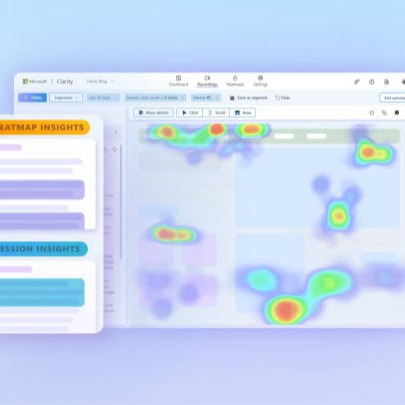
Analytics also provide opportunities to improve the customer experience over time. Google Analytics 4 allows marketers to identify traffic sources, user behavior, conversion paths, and audience engagement across multiple devices (Google Analytics, n.d.). When combined with heat map software such as Microsoft Clarity, marketers can better understand how visitors interact with individual pages and identify areas where users become confused or abandon the process.
Rather than making large changes based on intuition alone, data can be used to support smaller improvements that gradually increase campaign performance. This continuous optimization process aligns with the digital marketing principles discussed by Zahay and Roberts (2018), where ongoing measurement becomes part of the marketing strategy rather than an activity performed after the campaign ends.
Moving Forward
The Spotify Reserved Partnership was designed to create a more personalized connection between fans and live events. Achieving that goal requires more than creative ideas or effective advertising. It requires understanding how customers behave and using that information to continually improve their experience.
As digital marketing continues to evolve, organizations that make decisions based on meaningful customer data will be better positioned to adapt, improve, and create lasting value for both their customers and their business.
References
Google Analytics. (n.d.). Google Analytics 4 documentation. https://support.google.com/analytics
Kotler, P., Keller, K. L., & Chernev, A. (2022). Marketing management (16th ed.). Pearson.
Zahay, D., & Roberts, M. L. (2018). Internet marketing (4th ed.). Cengage Learning US.