Blog
From Streaming to the Stage: Rethinking How Fans Discover Concerts
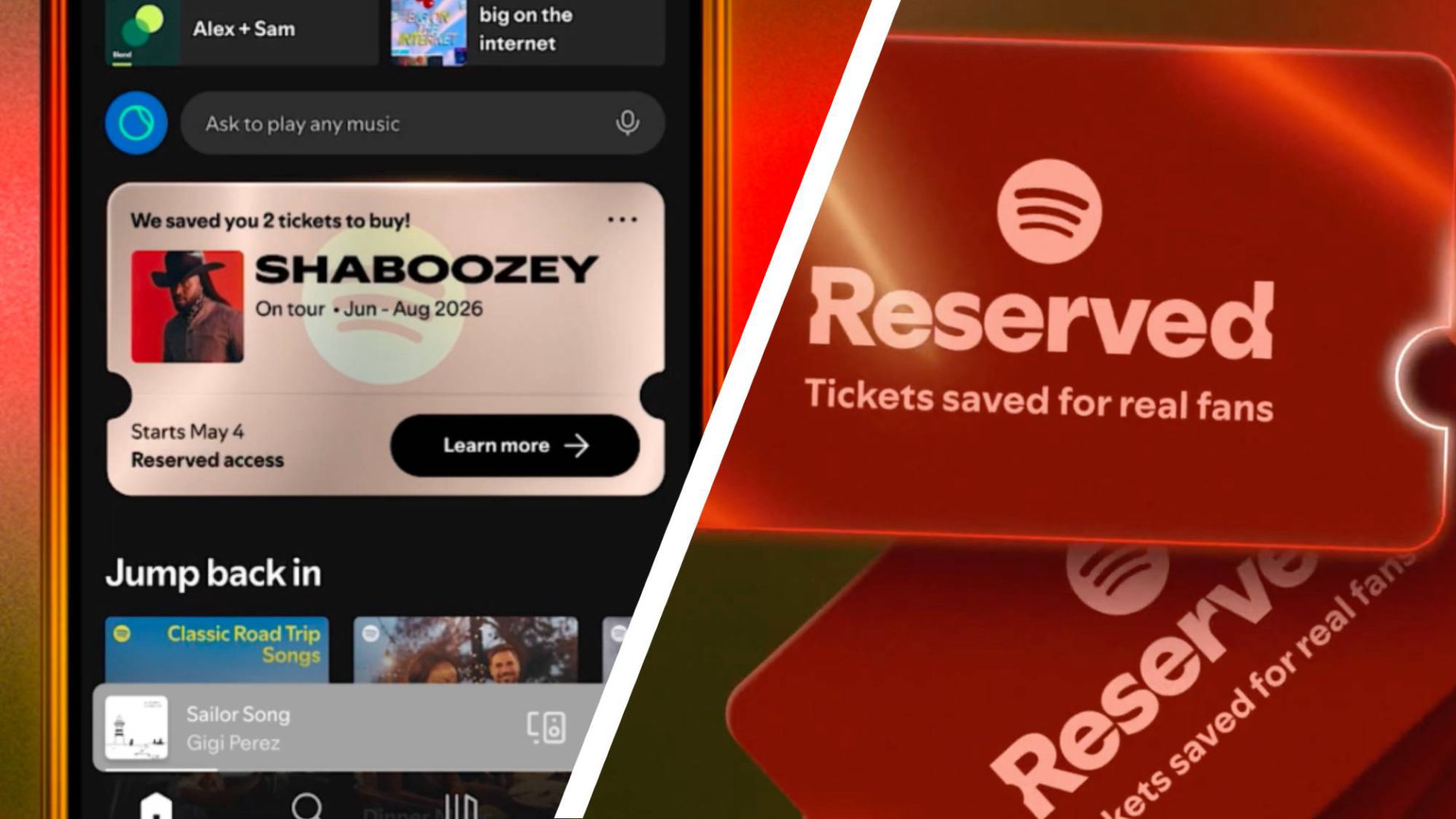
In the first part of my digital marketing plan, I introduced the Spotify Reserved Partnership for Live Nation Worldwide, Inc. The idea came from thinking about how disconnected music streaming and concert discovery still are. People listen to their favorite artists every day, follow them online, and then often have to separately discover that they are touring and search for tickets.

James Pace
Digital Media Designer
Spotify Reserved would attempt to close that gap. The concept is simple: use a fan’s actual listening behavior to connect them with relevant Live Nation events and reserved ticket opportunities. Instead of advertising every concert to everyone, the goal would be to connect the right fan with the right artist at the right time.
Behavior Matters More Than Broad Demographics
One of the biggest changes in my thinking while developing Part 2 was moving away from a target audience based primarily on age. It would be easy to say the target market is music fans between 18 and 40, but that misses what makes the partnership valuable.
A 24-year-old and a 54-year-old who both repeatedly listen to the same touring artist may be more relevant to the same campaign than two people who simply fall into the same age group. Spotify Reserved should focus first on artist affinity, listening behavior, geographic location, and the likelihood of attending a live event. Kotler et al. (2022) explain that effective segmentation should identify meaningful differences among customers, and in this case, actual behavior provides more useful information than age alone.
Social Media Should Have a Purpose
I also wanted to avoid the common strategy of recommending every major social media platform without explaining why. Instagram could focus on artist announcements and reserved access countdowns, while TikTok could capture the emotional transition from streaming an artist to finally seeing that artist live. The message could be as simple as:
You streamed them. Now see them live.
I selected Shen (2023) as a new source because the research examines how platform choice and content strategy influence engagement. That supported my decision to give each social platform a specific role rather than simply posting the same content everywhere.
The Website Should Connect the Experience
The Spotify Reserved website should not become another general concert website. Instead, I see it as a personalized access hub where users connect their Spotify account, see eligible events from artists they actually listen to, and move directly toward ticket access.
I selected Sakas et al. (2023) because the study connects website engagement with digital competitive advantage. This also connects with my own experience as the owner of Eleana Inc. A website can look great and still fail if the user does not understand what to do next. For Spotify Reserved, the design should make the path from favorite artist to ticket opportunity as clear as possible.
Why the New Research Matters
I did not want to add new references simply to meet the assignment requirement. I wanted each source to help answer a specific question. Shen (2023) helped shape the social media strategy. Sakas et al. (2023) supported the website and engagement strategy. I also selected Werle and Laumer (2022) because digital competitors are not always obvious. Competition could come from another live entertainment company, a streaming platform, an artist-direct model, or a partnership that does not exist yet.
That is one thing I have learned through my experience with Eleana Inc.: digital marketing changes quickly. Platforms change, customer behavior changes, and new competitors can appear from unexpected directions. The strategy has to be built around the customer journey, not around assumptions that may already be outdated.
For me, that is what makes Spotify Reserved interesting. Fans already stream music, follow artists, and attend concerts. The opportunity is not to create another behavior. It is to connect behaviors that already exist and make the journey from streaming to the stage feel natural.
References
Kotler, P., Keller, K. L., & Chernev, A. (2022). Marketing management, global edition (16th ed.). Pearson Education Limited.
Sakas, D. P., Reklitis, D. P., Giannakopoulos, N. T., & Trivellas, P. (2023). The influence of websites user engagement on the development of digital competitive advantage and digital brand name in logistics startups. European Research on Management and Business Economics, 29(2), 100221. https://doi.org/10.1016/j.iedeen.2023.100221
Shen, Z. (2023). Platform or content strategy? Exploring engagement with brand posts on different social media platforms. SAGE Open, 13(4). https://doi.org/10.1177/21582440231219096
Werle, M., & Laumer, S. (2022). Competitor identification: A review of use cases, data sources, and algorithms. International Journal of Information Management, 65, 102507. https://doi.org/10.1016/j.ijinfomgt.2022.102507